For the third consecutive year, Lumin.ai mystery shopped home builders across the United States to understand a simple question:
What happens after a buyer submits a lead?
The answer is encouraging. It's also concerning.
The industry has made measurable progress since 2024 engaging prospects at the top end of the marketing funnel. More builders are using text messaging. More are engaging across multiple channels. Fewer buyers are being ignored.
But despite those gains, one finding stood out above all others:
Of the builders Lumin.ai evaluated, not a single one delivered a fully automated and coordinated buyer journey across phone, email, and text.
And nearly 1 in 5 builders still completely ignored the lead submission.
The Good News: The Industry Is Moving Forward
Compared to our 2024 mystery shop, builders made meaningful improvements in several areas.
Fewer Leads Are Being Ignored
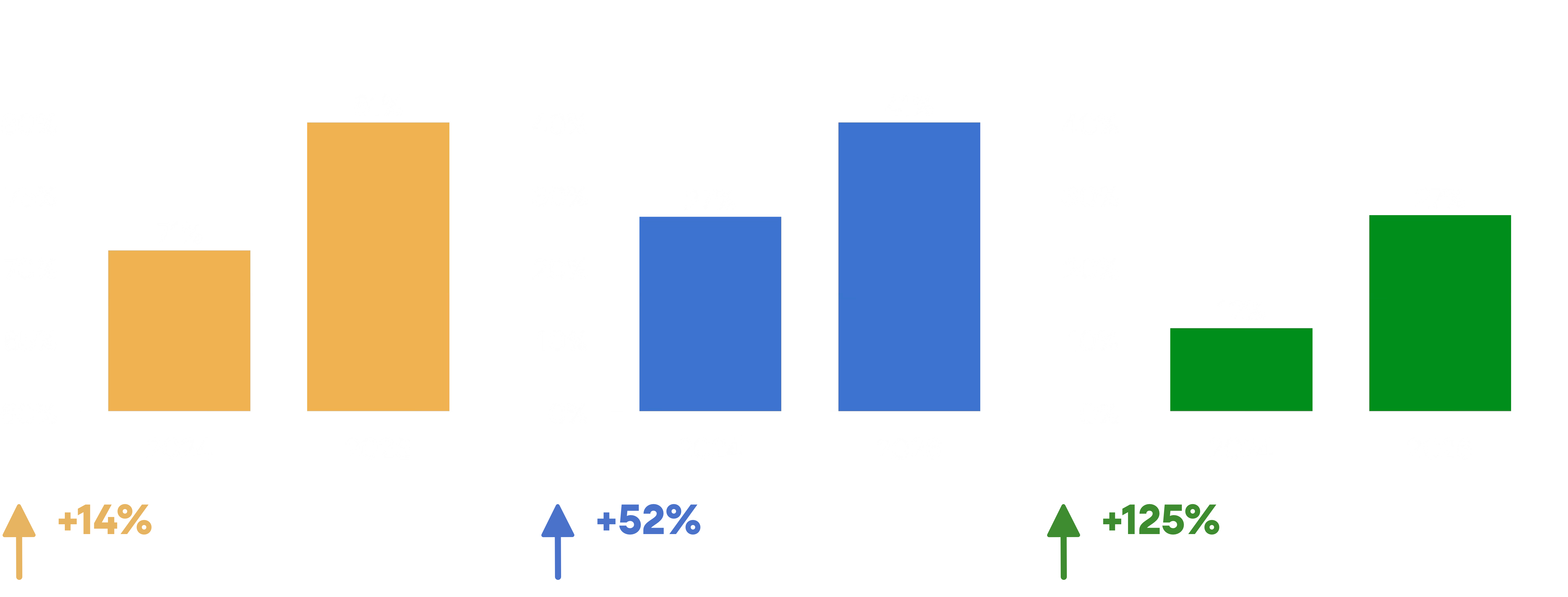
In 2024, only 71% of mystery shop leads received follow-up.
In 2026, that number dropped to 81%.
That's a 14% improvement in-follow-up rates over two years.
For an industry that spends hundreds of millions generating leads, that's meaningful progress.
Text Messaging Adoption Is Accelerating
Texting continues to gain traction as builders recognize changing buyer preferences.
In 2024, 27% of builders used text messaging.
In 2026, 41% of builders used text messaging.
That's a 52% increase in SMS adoption.
Builders increasingly understand that today's buyers often prefer conversational, mobile-first engagement over waiting for emails or receiving unknown phone calls.
Omnichannel Engagement More Than Doubled
Perhaps the most significant improvement was the growth of builders engaging buyers across phone, email, and text.
In 2024, only 12% of builders used all three channels.
In 2026, 27% of builders used all three channels.
That's a 125% increase in omnichannel engagement.
This shift suggests builders increasingly recognize that today’s buyers engage in the small moments between everything else competing for their attention: A quick text while waiting in the school pickup line. An email after dinner. Or a phone call returned during a break at work.
The easier builders make it for buyers to respond in those moments, the more likely buyers are to stay engaged. Otherwise, many simply won’t rearrange their day to fit their sales process.
The Bad News: More Channels. Little Coordination.
While adoption is improving, execution remains inconsistent.
Our 2026 results showed:
- 71% used email
- 56% used phone
- 41% used text
- 27% used all three channels
- 0% delivered a fully automated, coordinated buyer journey

Many builders are adding communication channels. Far fewer are connecting them into a cohesive buyer experience.
During our mystery shopping, we observed multiple examples of fragmented communication and redundant outreach throughout the buyer journey:
- Phone calls, text messages, and emails were often delivered by different representatives, making it unclear whom the buyer should engage with.
- Multiple emails with repetitive or poorly coordinated messaging were sent within short periods of time or on consecutive days.
- Feedback requests and marketing emails were sent in conflict with the prospect’s current stage in the journey.
The representative conducting the initial follow-up was often different from one ultimately assigned to the appointment.
We also found opportunities where intelligent automation would have improved buyer engagement:
- Lead inquiries submitted during evening hours often did not receive follow-up until the next business day, and in some cases, even longer.
- Many text conversations ended after a single outreach attempt or prospect response, leaving the prospect dangling.
The result was a collection of disconnected interactions.
Home buyer curiosity has a shelf life. Every unnecessary delay, duplicate message, or disconnected handoff gives that initial interest an opportunity to fade. By the time someone finally responds, the buyer may already be evaluating another community.
Adding channels is not the same as creating a connected buyer experience.
Why No Builder Earned an A
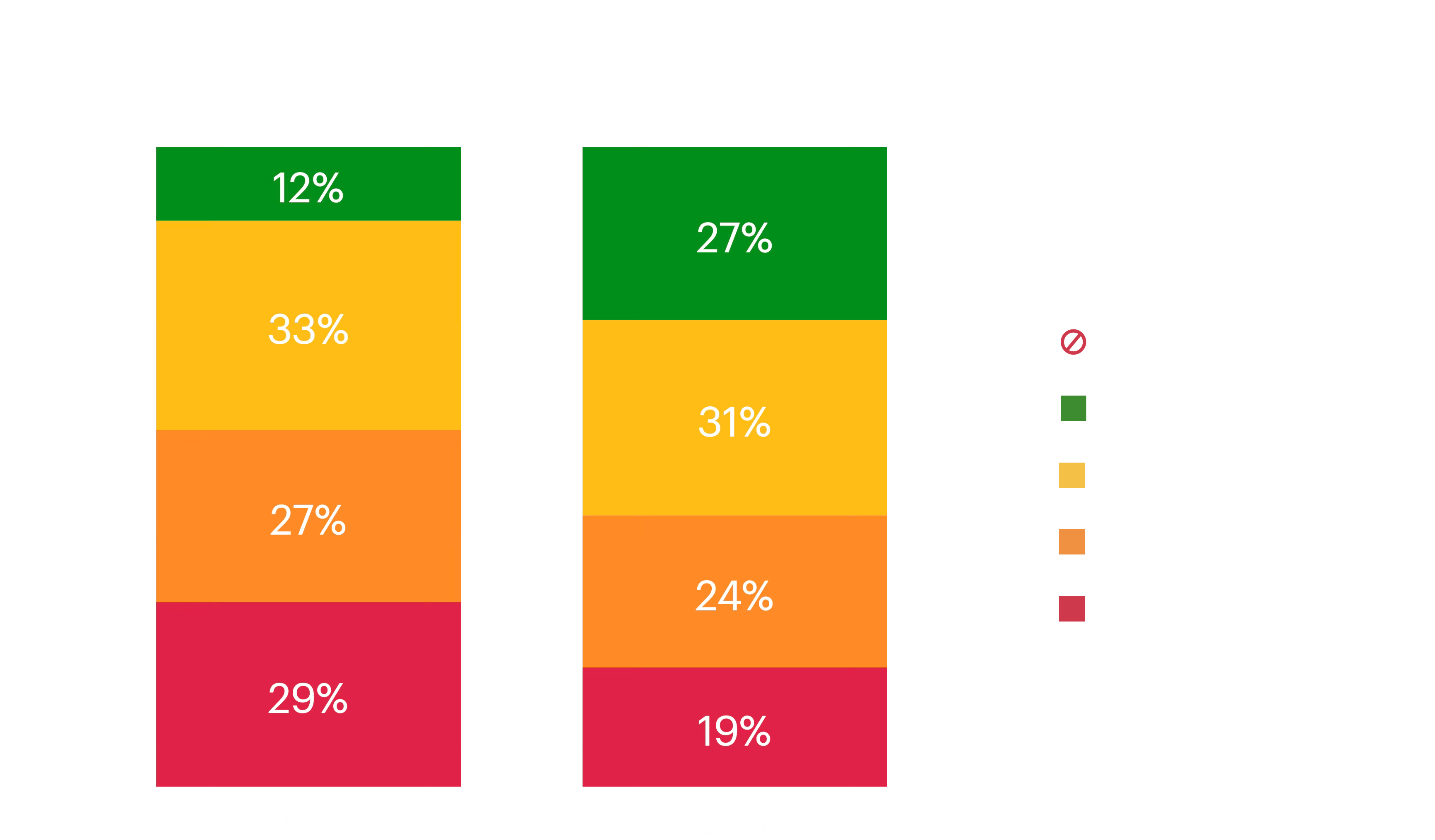
For this year's report card, builders were categorized as:
- A: Fully Automated & Coordinated
- B: Omnichannel
- C: Dual Channel
- D: Single Channel
- F: No Follow-Up
The distribution improved significantly versus 2024.
Builders moved out of the failing category and into the middle of the pack. Yet one statistic remained unchanged:
0% earned an A grade.
Why?
Because an A-grade experience requires more than simply using multiple channels.
It requires:
- Immediate engagement when buyer attention is highest, whether instantly after inquiry submission or later when a buyer re-engages, regardless of business hours
- Coordinated communication across phone, email, and text
- Awareness of where the buyer is in the journey and what actions they have already taken
- Clear next steps and frictionless appointment scheduling
Every builder that we evaluated failed on one or more of those elements.
What Top Builders Are Starting to Figure Out
However, the strongest performers shared a common characteristic.
They weren't focused solely on generating leads. They were focused on engaging buyers across various channels.
The most effective experiences included:
- Immediate response times
- Text-first engagement
- Multiple communication options
- Clear next steps
- Seamless appointment scheduling
In other words, they reduced friction. And in today's market, reducing friction matters.
.png)
Lessons From an Award-Winning Builder
One builder that exemplifies many of these principles is Southern Homes, an NAHB Silver Award winner in the Best Use of Technology category.

Southern Homes had successfully increased lead volume by 2000%, creating a significant opportunity for growth. As the organization captured more buyer inquiries, it faced a new operational challenge: how to engage every buyer quickly and consistently without proportionally increasing staffing requirements.
To address that challenge, Southern Homes utilized Lumin.ai’s conversational AI to immediately connect with buyers and guide them toward scheduling an appointment while intent was highest.
The result wasn’t simply faster response times.
For buyers, Lumin.ai provided instant engagement whenever they wanted and a frictionless path to scheduling an appointment.
For Southern Homes, Lumin.ai provided a scalable engagement model that enabled the sales team to focus on high-value buyer conversations while maintaining responsiveness as inquiry volume grew.
By helping Southern Homes capitalize on the demand it had already created, Lumin.ai demonstrated the impact that immediate, bi-directionally coordinated conversational buyer engagement can have on appointment generation and sales pipeline creation.
Southern Homes reinforces an important principle that applies to builders of every size: buyer attention is fleeting.
Even when inquiry volume is low and OSCs feel like they have time to follow up, they lose leads. Every buyer reaches brief moments of engagement, when distractions subside. Those moments don’t wait for business hours or an online sales consultant to become available.
Miss them, and the conversation changes. Instead of engaging buyers at peak interest, sales teams resort to interrupting personal time, and still lose buyers to competitors who are more responsive.
When inquiry volume rises, the problem compounds. But the solution to 24/7 responsiveness also is the path to scalability. With Lumin.ai’s conversational system, Southern Homes adapts to every buyer’s fleeting moments of attention, even when leads flood in.
While many builders still rely on manual processes and business-hour coverage, the top leaders are increasingly building systems that engage buyers when it matters most.
The Next Competitive Advantage Isn't More Leads
For years, the industry focused on top-of-funnel metrics:
- Traffic
- Cost per lead
- Lead volume
- Advertising performance
Those metrics remain important. But as lead costs continue rising, the next opportunity may be found elsewhere.
The builders who win the next decade will be the ones that:
- Respond fastest
- Engage consistently
- Coordinate across channels
- Create the easiest path to a conversation
Because buyers have changed. Their expectations have changed.
And increasingly, the difference between winning and losing a sale happens after the lead is submitted.
Final Takeaway
The 2026 mystery shop results show an industry moving in the right direction.
- Text messaging adoption is growing.
- Omnichannel engagement is increasing.
- Follow-up rates are improving. .
But significant gaps remain. For the builders that we evaluated:
Nearly 20% ignored the lead inquiry.
Only 27% provided engagement across phone, email, and text—but even those experiences were largely uncoordinated.
None delivered a fully automated, coordinated buyer journey.
Progress is real. The opportunity is even bigger.
For builders looking to gain an advantage in a competitive market, the next breakthrough may come from engaging leads in the way modern buyers already expect.
Methodology: Lumin.ai submitted mystery-shop inquiries to home builders during evening hours, then evaluated engagement across phone, email, and text channels. Comparisons across 2024, 2025, and2026 justify the assertions regarding progress and continued gaps.